


Can't Find Your Drive in the Sky? 7 Reasons Golfers Over 50 Are Switching to the Lens Pilots and Competitive Shooters Use
You hit a good one, look up, and it is gone after a hundred yards. You say "I got it" and you didn't. Here is the part nobody tells you: you are not losing your eyesight. You are losing a white ball in a bright sky, and there is a lens made for exactly that.
You are not losing your eyesight. You are losing a white ball in a bright sky.
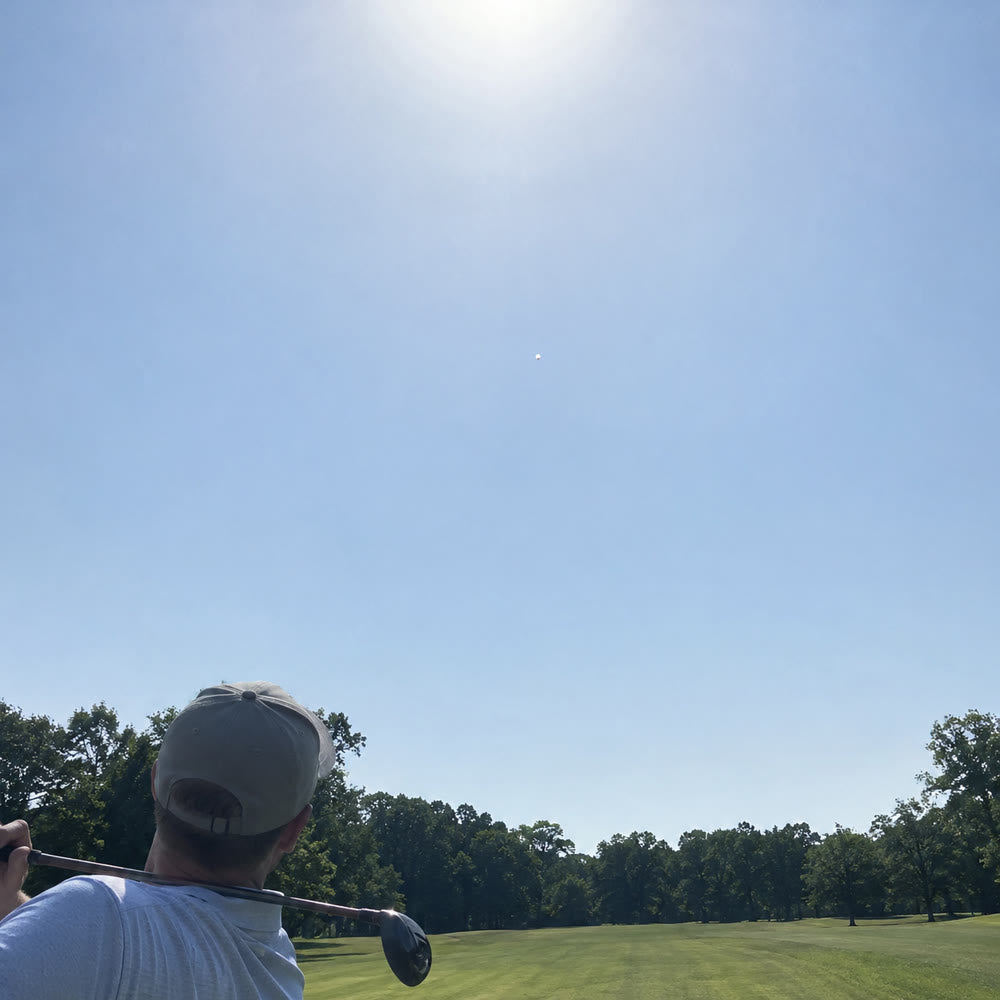
Plenty of golfers pass the eye test and still cannot follow the flight. One put it plainly on a golf forum: "Guess I'm theoretically close to 20/20, but once the ball has the sky as its background." That sentence is the whole problem.
Your eyes are what they are. Nobody's get younger after 50. But a white ball against a pale blue sky is a low contrast picture for anyone. The ball is bright, the sky is bright, and the edge between them disappears.
That is why the yellow ball, the new prescription and asking the group to watch never fixed it. Those make things sharper or brighter. The problem is contrast.
Your sunglasses are making it worse
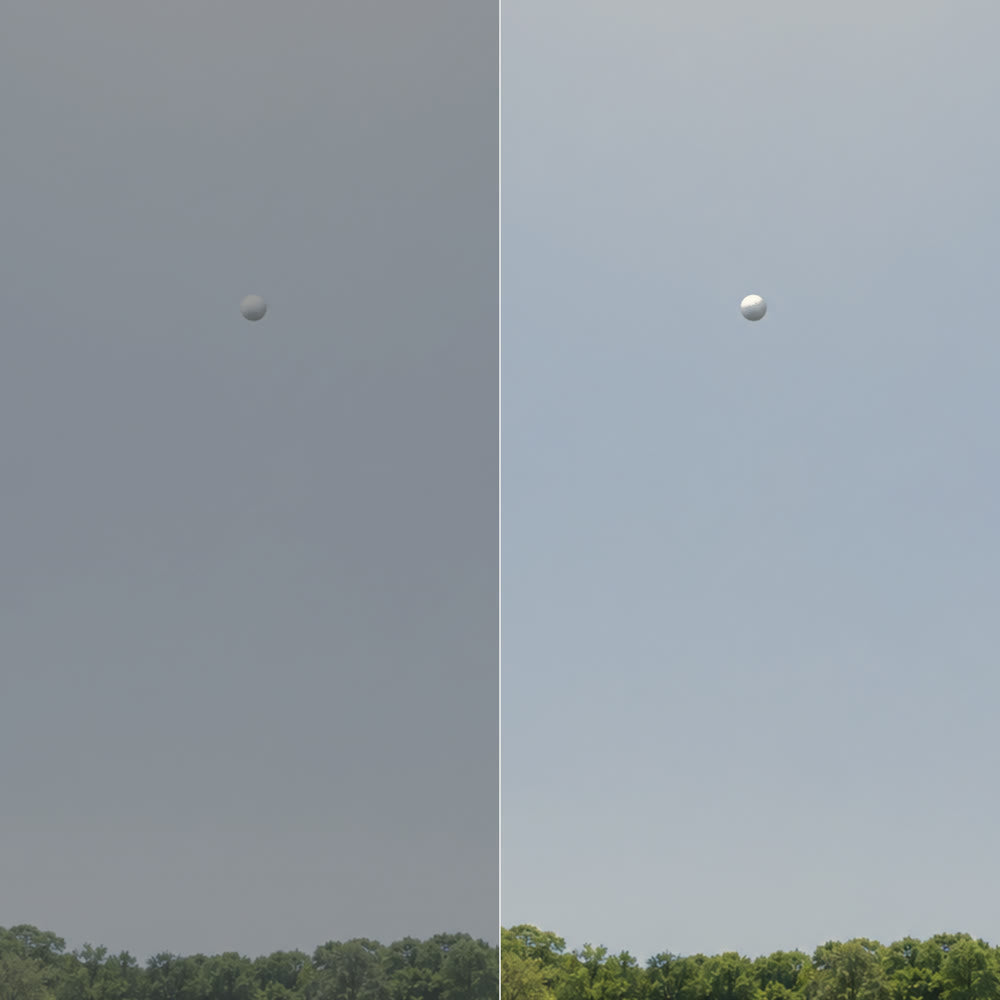
Golfers say it themselves: "I definitely see less with sunglasses on." They are right. A dark gray lens dims the ball and the sky by the same amount. The day gets darker and the ball is still lost in it.
Darker is the wrong fix. The people who have to pick a small bright thing out of the sky, pilots and clay shooters, do not reach for dark gray. They reach for amber.
It is the same lens tech pilots and competitive shooters use

Clay shooters have to pick an orange target out of the sky in a split second. Their own association's magazine, Clay Target Nation, told them in March 2019: "A light or medium yellow lens is better for shooting clays, as it will enhance orange targets, making them more visible."
Pilots got there before golf did. A WWII flying goggle with amber lenses sits in the Smithsonian's National Air and Space Museum, and the company that makes flight helmets for military aircrew offers a high-contrast visor for its fixed-wing pilot helmet. Our founder Mark flew for a living and wore his amber aviators on the course for years. That habit became BALLHAWK.
So if you have seen "ball finder glasses" and figured they were a gimmick, fair. This is not a new gadget. It is an old lens two professions have trusted against bright sky for decades, put in a golf frame.
Amber cuts the blue. The sky drops back. The ball does not.
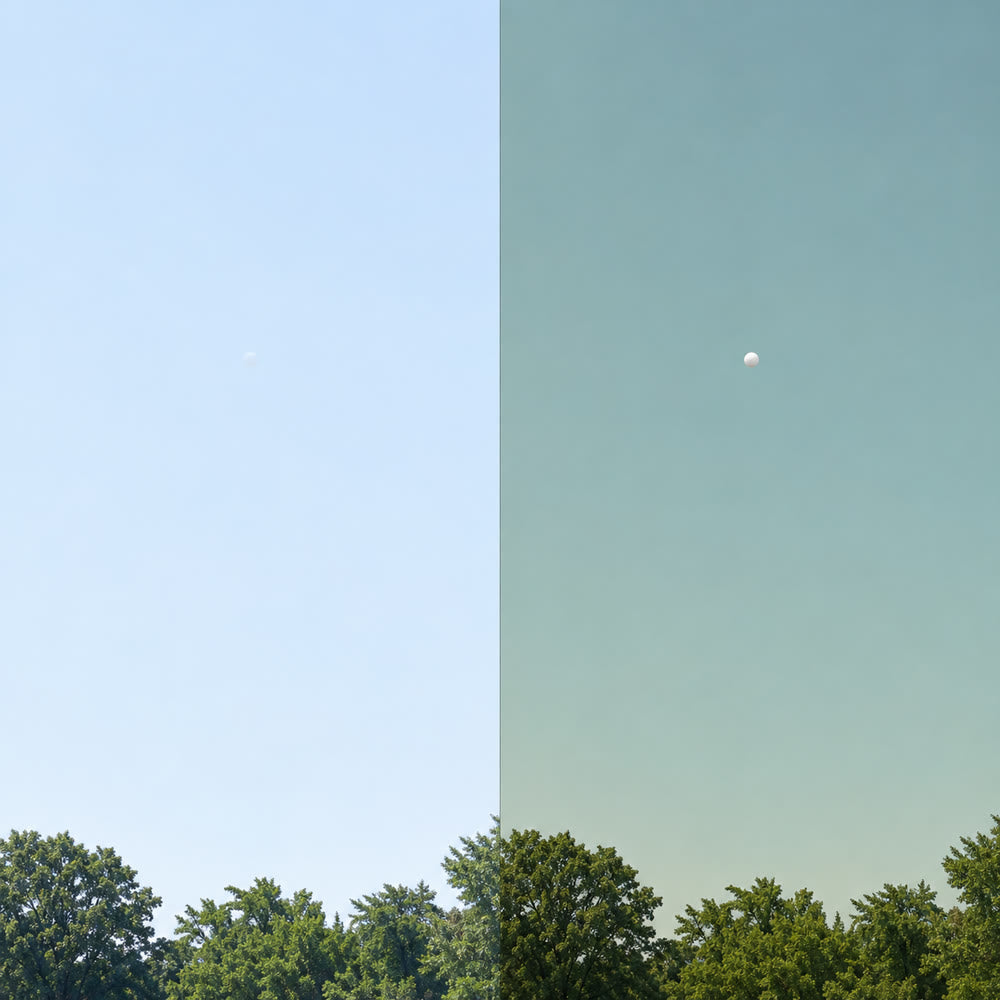
The sky is mostly blue light. An amber lens holds the blue back, so the sky goes a shade deeper while a white ball keeps its brightness. The ball stands out against the sky again.
The helmet maker describes its high-contrast lens the same way: "all blue components appear black or very dark, and other color components are nearly normal." And a 2000 study in Optometry and Vision Science found yellow lenses enhance contrast "when viewing bright objects against a blue-based background, such as the sky."
That is why it does its best work where golf is hardest to watch: a white ball against a bright or hazy sky, off the tee and down the fairway.
It is a real pair of golf sunglasses, not a novelty
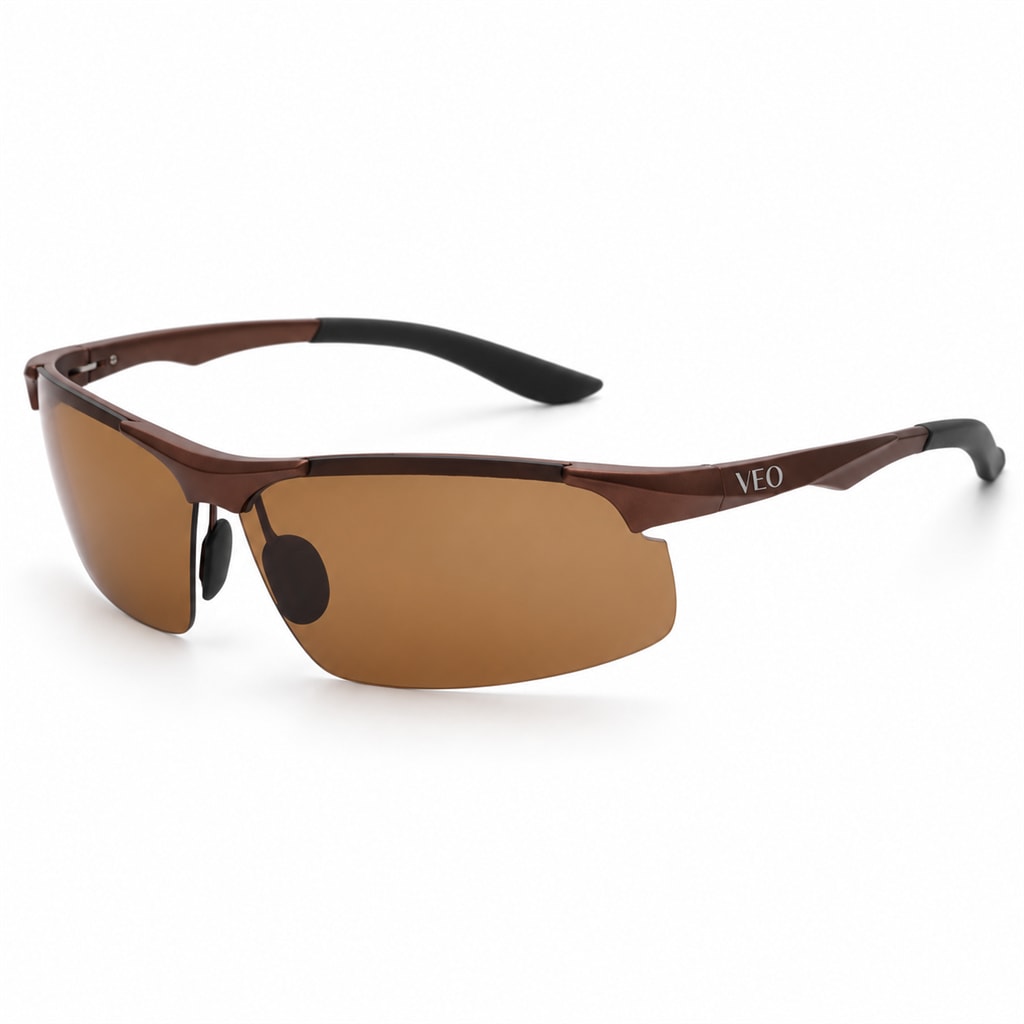
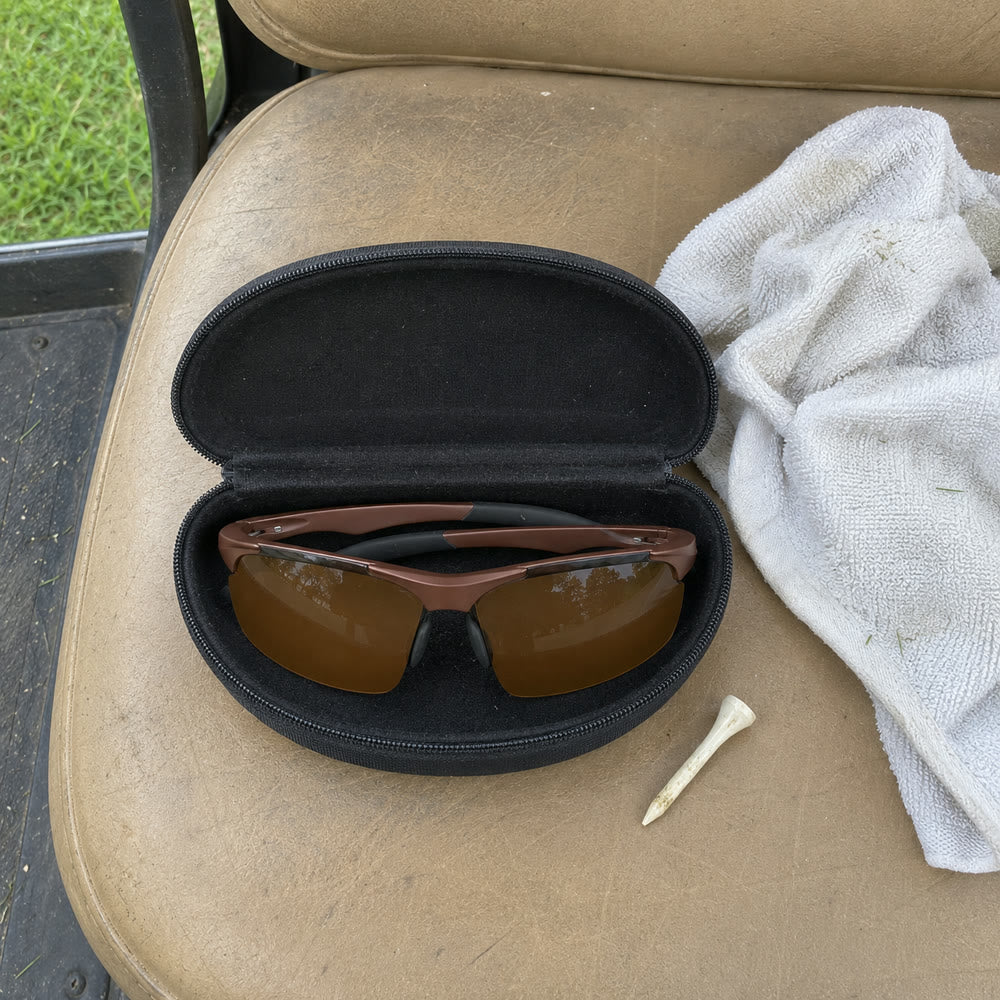
BALLHAWK PRO is a metal half-rim frame in aluminum-magnesium, 20.8 grams. Polarized BALLHAWK Contrast Lens. UV400. Read off the box, that is the whole spec sheet.
The lens is amber, not dark gray, so it does not turn the course into dusk. It cuts the glare and adds contrast. One buyer wrote in: "I love them, very light I forgot I'm wearing it."
Wear prescription glasses to play? Then this is not your pair. Get the BALLHAWK CLIP-ON, which clips over the glasses you already wear.
Golfers who wear them say the same thing

BALLHAWK is rated 4.7 from 1,021 reviews. The notes that come in to our team sound like this: "The glasses work fantastically. Makes the game so much easier."
And this: "As advertised they allowed me to see the ball better. I really love them." Another golfer put it in course terms: "In the sunny areas on the course they do improve the white of the ball standing out."
You get 30 days on the course to check it yourself
Do not take our word for it, and do not take the pilots' either. Play with them for up to 30 days after delivery. Tee it up on a bright day, hit one, and watch where it goes.
If you do not see the difference, you get a full refund. That is the 30-day money back guarantee, and it covers every pair.
It is $31.98. Go see your drive land.
You have tried the eye exam, the yellow ball and the dark sunglasses. This is the lens pilots and competitive shooters use, in a golf frame, at 60% off for Early Black Friday, with 30 days to check it on your own course. When the sale ends it goes back to $79.95.
BALLHAWK PRO at 60% off
- 30-day money back guarantee
- 3-5 day shipping with USPS
- Free shipping on 2 or more pairs
Questions
Will the frame hold up?
The PRO is a metal half-rim frame in aluminum-magnesium, not plastic, and it weighs 20.8 grams. It comes with a microfiber pouch and a zipper sport case for the bag, and the 30-day money back guarantee covers it.
Is the lens too dark?
No. It is amber, not dark gray. It is built to add contrast, not to darken the day, so the course looks warmer and the ball keeps its edge against the sky. It is polarized and UV400, so it still does the sunglass job.
Where does it work best?
With a white ball against a bright or hazy sky, off the tee and down the fairway. That is where contrast matters most. In deep shade or under trees there is less blue to cut, so expect less of a difference there.
How fast does it ship?
3-5 day shipping with USPS. Shipping is $4.95 on one pair and free on 2 or more.
What if it does not work for me?
Play with them for up to 30 days after delivery. If you do not see the difference, you get a full refund. That is the 30-day money back guarantee.